The Boys' Crusade: The American Infantry In Northwestern Europe, 1944-1945 By Paul Fussell

posted by mmblog @ 10:44 PM
0 comments


posted by mmblog @ 10:44 PM
0 comments

Author Dan Jones could turn me into an Anglophile. Henry V is great reading entertainment, and could be a useful learning tool in writing, history, and literature classes.
Jones wrote almost all of it in present tense, out of the norm for history books, but his strict adherence to the writing basics would not let me go. It worked.
I lived in London for a year, working for my master’s degree. I took some historical walking tours, read what I had time for, but I knew I’d never learn it all. However, Henry V helps me fill those gaps very quickly. I’d like to read more of Jones’s work. He is an excellent teacher.
Henry V is best remembered as the warrior king that planned, and led, England’s overwhelming victory over the French at Agincourt in 1415. Some regard him as very possibly England’s best king, ever. Tragically, he died only a few years later of a mix of illnesses we would probably end much more easily cured now than in medieval times.
Henry V also reminds the reader of the identity crisis, or transition, the English were in having largely been Norman French who conquered what we now call England. Many of those English still considered themselves French. Trying to unite England and France was one of Henry V’s goals.
He died in France in 1422 at 35, but his body was transported to London for burial.
I had the unexpected pleasant surprise of reading into a brief mention of an ancestor: Lord Edward Charlton of Powys, in Wales, led a group of locals near Welshpool in the capture of Sir John Oldcastle. Oldcastle, also an eventual favorite character of William Shakespeare, had been a fugitive for several years. The title Lord obviously means he had money. I have not been so lucky.
I received Henry V as a review copy, and sincerely appreciate it.
posted by mmblog @ 8:00 PM
0 comments
A recommendation for even the casual political observer.
I covered politics in my reporting days, and knew about a lot of these things, but this one names names, and doesn’t hold back, using plenty of evidence.
Corruption in politics has probably bee with us since before recorded history, and measures not yet taken could alter its course. However, it’s those lawmakers most concerned here that would have to make those laws. We might have to wait a long time.
Author Peter Schweizer does a pretty good job of informing the curious, approaching government bribery and corruption on several levels he attempts to reach the minds of numerous readers.
“Unfortunately, many politicians in Washington
believe they are entitled to on the job enrichment, and building family empires at our expense,” Schweizer notes in the conclusion.
He closes with this thought: “Ethical reputation is worth passing along to one’s own children, and one’s own country.”
posted by mmblog @ 7:39 PM
0 comments

Journalist author Beth Macy exhibited her profound writing experience, and professionally credited her numerous sources and assistants, jumping headlong into the opioid crisis.
posted by mmblog @ 7:35 PM
0 comments
Exceptional reading, and it was all based on a win-win concept.
These True Stories could come from anywhere in any situation where escape was desired and necessary. It was also quite uplifting, as the stories were all ending in successful escapes from either military and/or political situations. There were unsuccessful escapes, which were a part of the greater story, and added to the drama, helping it to be a gripping read all the way through.
The escapes were largely from wartime prison camps, but also from oppressive situations in East Germany, Cuba, or Communist China. Not everyone lived to tell their tale, but there was someone to retell the details and verify.
The two longest stories stood out from the rest, and that was very hard to do with each story in this anthology standing high on its own merits.
The Long Walk, near the center of the 606 pages, left lasting impressions. The only time I questioned the word True was in the final part of The Long Walk was when it described the few survivors seeing the Yeti snowman, and his wife, up in the Himalayas. But then my simple math skills kicked in, realizing they had this vision after going eight days without food. There were other foodless periods in their long trek from a Stalinesque gulag in northern Siberia to final freedom in India.
The final story originated in the WWII German prison camp at Colditz. The camp wasn't like other Nazi prison camps. Colditz was built deep in the German interior in a stone fortress. That helped to restrict escapes down to one or two POWs. The account of this escape came from a British Royal Air Force officer who managed to escape to neutral Switzerland. There was nothing easy in that feat. Good luck played a great role there.
Numerous movies and documentaries leaped from these stories throughout the years, giving further testimony to the quality of this book. An easy 5 0ut of 5 for me
posted by mmblog @ 7:28 PM
0 comments
Rhoda Blumberg’s Shipwrecked! was found for 50 cents at the local library here in Metter, Georgia. I’m glad I had the dimes.
I think I’ll hand this to my daughter. She turns 8 next month, but it’s probably a YA book. I think this doesn’t shoot over her head.
Blumberg connects with easily understood content and a collection of good, and stunning artwork done by this non-fiction’s main character, Majiro Nakahama. Other Japanese and American artists contributed, too.
His true and incredible journey from poor fisherman, as a boy, to eventual samurai and college English professor is the stuff of fantasies, but his story is known throughout Japan. It deserves much more attention in the U.S., and other countries.
Majiro spent several years in New England thanks to his good fortune to have been rescued, with his boat mates, by a whaler. He went to school, learned English, and things went his way.
This is not a long book. It’s under 100 pages, but well worth your time, especially if this is all new to you. There are other books about Majiro out there, too. Blumberg professionally lists her sources.
Similar to Majiro’s real storybook-type life, it was just in the right place at the right time for me.
posted by mmblog @ 7:14 PM
0 comments
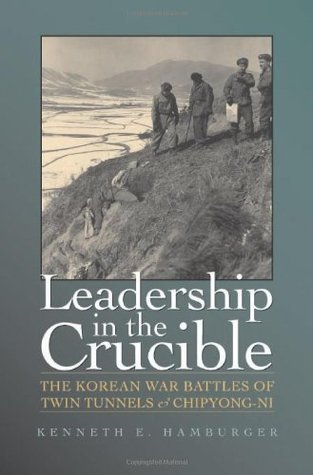
Leadership is the keyword here.
Author Col. Kenneth Hamburger was a West Point History professor when he wrote this as both its own self-contained history lesson, and a lesson in leadership in 2003. Army administrative heroes like then Colonel Paul Freeman and French Lt. Col. Ralph Monclar were the good guys.
U.S. Army Col. Marcel Crombez, who led the armored relief column that broke the three-day siege at Chipyong-ni, received plenty of criticism for his handling of that assignment. He allowed soldiers to ride on tanks in the gauntlet fired on from both sides of the road, leading to Chipyong-ni. Not all of them made it.
Freeman was wounded in the lower leg in a mortar attack. However, he was very fortunate that he had momentarily just switched from having his head where his lower body had been on a cot in his tent.
Monclar, then 58, was one of the most experienced and decorated French war veterans in the 20th century and was a three-star general prior to going to Korea. He self-imposed his own rank reduction so he could participate in the United Nations' action against the invading communist forces. He impressed many when climbing the surrounding hills and mountains on patrol with the younger soldiers, despite his age.
The fierceness of the French was also noted in their numerous bayonet charges when ammunition ran out. They entered Korean action with a chip on their shoulders from the French army's quick collapse against the invading Germans in 1940.
Freeman rose to become one of the U.S. Army's top generals before retirement, and his eventual death at 80 in 1988. This was Monclar's last war. He died in France in 1964. Both were certainly worthy of more attention than only Hamburger's West Point cadets. Both also demonstrated genuine concern for their troops.
Monclar reached retirement age in 1952 after having served since WWI. He was wounded many times but died from heart failure in 1964 at 72. He was also a polyglot, speaking several languages. Freeman was assigned to China early in his career in the 1930s where he also seized the moment and learned to speak Chinese -- a job skill he used to interrogate battlefield prisoners. Both also believed that it was important to lead from upfront with the men.
Hamburger noted that communist troops ran, exposing themselves to heavy Allied fire and many casualties when Crombez's relief column arrived. The UN victory is credited with being decisive in halting any further communist advances toward the south.
Leadership reads easily and quickly.
posted by mmblog @ 7:03 PM
0 comments
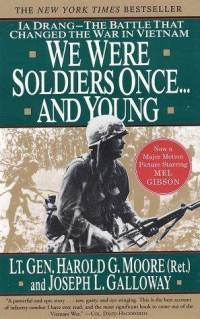
You really have to persevere through to the end. After reading all of the initial chapters with the horrors of war and finally coming to Aftermath and Chapter 24 it all falls together.
Much of the text was a more honest content than one might find in a book written by an experienced author or trained novelist. However, Col. Hal Moore and Joseph Galloway used the testimony of others there at Ia Drang in 1965 to tell the story. This is not historical fiction.
They don’t hold back much, if any, about the many horrors of battle in the main fight, depicted somewhat in the movie “We Were Soldiers,” and the following lesser-known fight at Landing Zone Albany. Again, the book tells you much more than the movie.
It took me longer than normal to read this for two reasons. I couldn’t stomach the grizzly details as much as I thought I could, but mostly it was my medical situation, which has kept me in medical facilities since shortly after I started reading it in early February. A lot of that medicine is not good for the eyes, too.
The need to read here was sparked in research, and I’ve also moved to where there’s a library a short walk away. That’s very nice, but this hot, sweltering, humid heat isn’t nice at all.
I’m glad I read “We Were Soldiers Once, And Young.” I wasn’t in Vietnam, but grew up with it, and needed to know.
posted by mmblog @ 6:55 PM
0 comments

This one literally hit home, and very hard. I will be sorting this one out for a very long time.
I knew of these battles, and soldiering processes Blunt wrote so well about. My first stepfather, who became a psychiatrist after the war. Over time I have learned why, and Foot Soldier marched right into my mind here. My stepfather, and Author Roscoe "Rockie" Blunt both served in the 84th Division in Europe. My stepfather was a medic, and unnamed medics were noted four times. I had to wonder if that stepdad was, at least, one of them.
posted by mmblog @ 6:46 PM
0 comments

posted by mmblog @ 1:48 PM
0 comments

Not disappointing at all. It was a battle to take a break. The story gave very little rest and looks like it could be the start of another series. Author Chad Zunker has written them before.
This one was centered around the short, new, second marriage of Luke Driskell to an artist named Ashley, or so he thought. The circumstances, and his pursuit of the truths, taught him there's more he didn't learn in their courtship. There were plenty of other things he could only learn in a trek across the country, and with professional, high-level, help.
It starts when she steps unwillingly, and unknowingly into the spotlight by jumping out of her car to rescue eight children from a burning classroom. It was a great feat, but someone recorded it on their phone, and it went viral on the internet. Ashley wasn't the same after that, and in hiding until the end of it all on a remote, unnamed, far away island somewhere.
The story, without any further spoilers, involves China, and its ambassador's family, as well as a U.S. Senator, and the reader's ability to keep turning pages.
It's a terrific read, and many might find a battle within themselves on the length. It's just under 200 pages, and could be read in one sitting, if life doesn't call you elsewhere.
Zunker makes full use of modern things like Facebook, cell phones, and private jet travel. The Wife You Know was also almost flawlessly edited. Exceedingly close to perfection. Toward the end I found an instance where the word of was missing. The chapters were short and well placed, helping the reading speed, and reader breathing.
I found it enjoyable, and very glad I was selected to receive my review copy. An easy five-star selection.
Zunker is originally from the Houston-area and played wide receiver at Texas in the mid-90s while earning a Journalism degree.
I read a review copy sent in advance of the book's release.
posted by mmblog @ 8:54 AM
0 comments

Kahlil Gibran wrote many general observations and truths in his 105-page The Prophet. It is largely centered around the informal ceremony of he and his family sailing away from the Middle East toward the United States.
It is all people-focused, and he covered a lot of ground before sailing away.
"Oftentimes in denying yourself pleasure you do but store the desire in the recesses of your being.
Who knows but that which seems omitted today, waits for tomorrow?
Even your body knows its heritage and its rightful need and will not be deceived."
He notes many balances in life which normally cannot be controlled by the average person. He was largely a poet and artist, often adding his own drawings to the 13 books he wrote.
Kahlil lived between 1883 and 1931. The Prophet was published in 1923.
Further reading about Kahlil can be found in This Man From Lebanon, A Study of Kahlil Gibran, by Barbara Young.
posted by mmblog @ 8:55 PM
0 comments

Only semi-retired, still looking to get manuscripts published, raise young children, and see more of the world.


